What does the thickness number mean?
A wetsuit’s millimetre figure describes its nominal neoprene thickness. The number is a useful starting point, but suits can use different thicknesses in different panels. A reinforced loading pad is also separate from the main body specification.
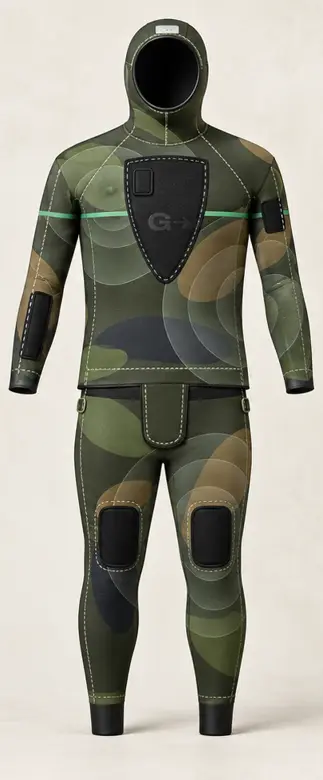
GEDDON’s planned models are Prawle 5.5mm and Start 7.5mm. Both sit within the same First Edition collection, with Moor, Kelp and Night colourways. Final panel specifications will be confirmed before launch.
5.5mm versus 7.5mm at a glance
| Factor | 5.5mm | 7.5mm |
|---|---|---|
| Insulation | Less neoprene thickness than 7.5mm. | More neoprene thickness, generally offering more insulation in an otherwise comparable suit. |
| Movement and bulk | Typically less bulky; assess shoulder and hip movement in the actual suit. | Typically bulkier; a good pattern and correct size remain essential. |
| Buoyancy | A change of suit still calls for reassessing your weighting. | More neoprene can mean more surface buoyancy; do not reuse a weighting setup without checking it. |
| GEDDON model | Prawle 5.5 | Start 7.5 |
Start with the dive, not a temperature chart
Water temperature is only one part of the decision. Consider how long you expect to be in the water, your activity level, the conditions between dives and your own experience of getting cold. Wind and time spent at the surface can also change how a session feels.
A short, active session and a long spearfishing outing in the same water can create different demands. Use your experience with an existing well-fitting suit as a reference, then discuss unfamiliar conditions with a qualified local instructor or dive professional. There is no single temperature cut-off that makes one thickness right for everyone.
Fit can undermine either thickness
More material cannot compensate for a poor seal or a cut that leaves large gaps. Check the neck, lower back, underarms, crotch and the overlap between a two-piece jacket and trousers. At the same time, avoid choosing a size that restricts breathing or forces your shoulders forward.
Compare measurements with the model’s size chart, and assess the complete suit rather than only the jacket. For a different balance through the bust, waist and hips, see our women’s wetsuit fit guide.
Open cell, reinforcement and seals also matter
Two suits carrying the same thickness number can feel different because of their neoprene, interior finish, seals, pattern and reinforcement. An open-cell interior sits directly against the skin; it is not simply another word for a thicker suit.
For spearfishing, check the position of the loading pad and whether knee, elbow and forearm details suit the way you use your equipment. GEDDON’s proposed specification includes a sternum loading pad, reinforced knees and elbows, smoothskin seals and a reflective hood crown. These features do not replace correct fit or normal dive procedures.
Recheck buoyancy when changing suits
Changing neoprene thickness can change surface buoyancy and how the suit behaves as it compresses at depth. Do not use an online thickness comparison to calculate a fixed amount of ballast. Review weighting and buoyancy with a qualified instructor when changing equipment or conditions.
Planning colder-water trips?
For Norway or Alaska, consider the specific site, season and complete equipment setup. Read our cold-water wetsuit guide and Scorpena, SpearPro and GEDDON comparison alongside the thickness trade-offs.
Choosing between GEDDON Prawle and Start
Register Prawle 5.5mm or Start 7.5mm as your current preference on the waitlist. If you have not decided, select “Not sure”. Your preference helps us understand demand; it does not commit you to a purchase or reserve an edition number.
The First Edition is planned as 100 individually numbered suits, 001–100, from £449, with shipping planned for spring 2027. Final prices, specifications and availability will be confirmed before launch.
About this guide
Written by GEDDON to explain wetsuit terminology and the collection in development. This is general equipment information, not a temperature rating or a substitute for individual fit advice.
Reference: Waihana’s published 5.5mm wetsuit construction illustrates current manufacturer terminology. GEDDON specifications and launch plans are described separately and remain subject to sample testing.